The Lost-Wax Process, Explained Before You Tour a Foundry
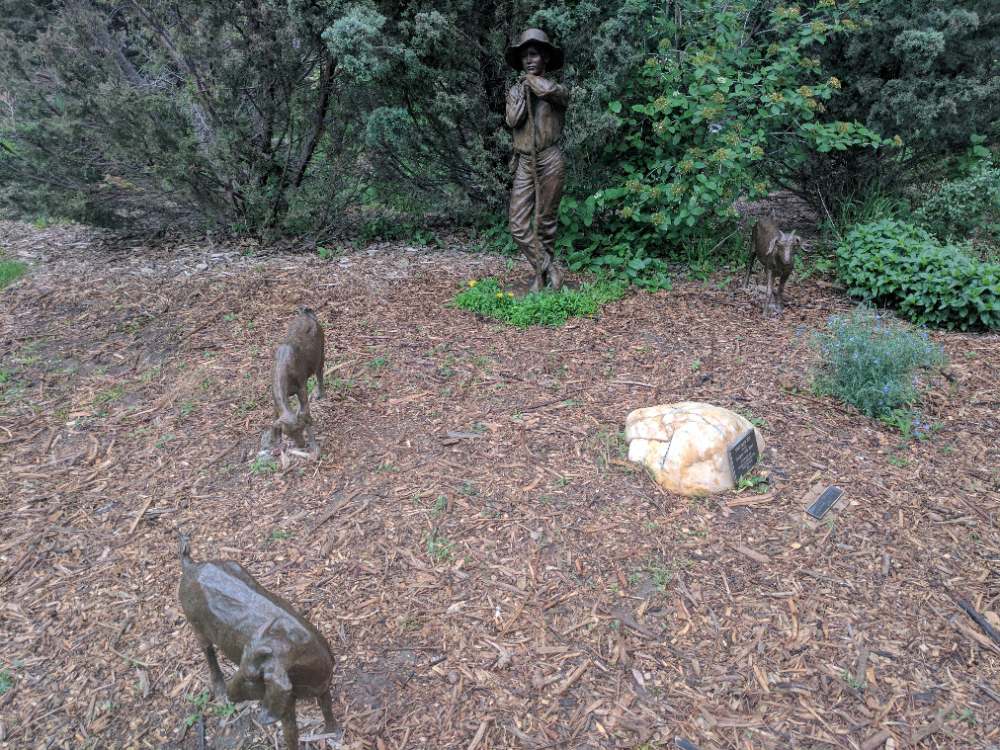
"Shepherd Boy" by Judy Black — photo by Ijon, CC BY-SA 4.0
Both of Loveland's public foundry tours — Art Castings of Colorado and Bronze Services of Loveland — walk you through an active production floor using the lost-wax casting method, the same basic technique bronze sculptors have used for thousands of years. Knowing the sequence ahead of time makes the tour a lot more interesting, because you'll actually recognize what stage each piece on the floor is at.
1. The original sculpture
It starts with the artist's original model, usually sculpted in clay or wax. This piece never gets cast directly — it's used to make a mold.
2. The rubber mold
A flexible rubber mold is built around the original sculpture, capturing every detail. This mold can be reused to produce multiple wax copies, which is how a foundry can cast a limited edition of the same piece.
3. The wax positive
Molten wax is poured or brushed into the rubber mold and allowed to harden, producing a hollow wax replica of the original sculpture. This is the piece that gives the process its name — and the piece that gets "lost" a few steps from now.
4. Spruing and the ceramic shell
Wax rods called sprues and vents are attached to the wax positive, creating channels for molten bronze to flow in and gases to escape later. The whole assembly is then dipped repeatedly into a ceramic slurry and coated in sand, building up a hard ceramic shell layer by layer.
5. Burning out the wax
The ceramic-coated piece goes into a kiln, where the heat melts and burns out the wax entirely, leaving a hollow ceramic shell in the exact shape of the original sculpture. This step is where "lost wax" happens — the wax model is destroyed in the process, which is why each mold can only carry a limited number of casts before it wears out.
6. Pouring the bronze
Molten bronze, heated to roughly 2,000°F, is poured into the empty ceramic shell through the sprue channels. This is usually the most dramatic moment of any foundry visit — expect heat, noise, and bright orange metal.
7. Breaking out and metal finishing
Once the bronze cools, the ceramic shell is broken away (sometimes with a hammer, sometimes with water blasting) to reveal a rough bronze casting. The sprues and vents are cut off, and the piece is welded back together if it was cast in sections.
8. Chasing and patina
A metal finisher "chases" the surface — grinding, filing, and polishing away casting seams and imperfections until the surface matches the artist's intent. Finally, chemical patinas are applied with heat and brushes to give the bronze its final color, from deep browns to greens and blues.
Once you've seen the process, the permanent collection at Benson Sculpture Garden reads completely differently — every piece there went through all eight of these steps before it ever reached the park.